I design and build AI productsfor workflows wherejudgment is the job.

About

I do my best work before the roadmap exists.

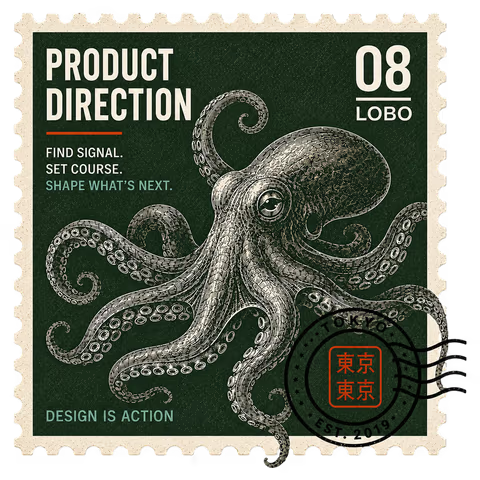
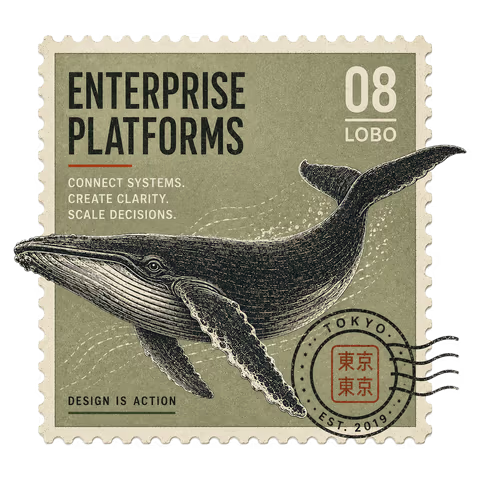
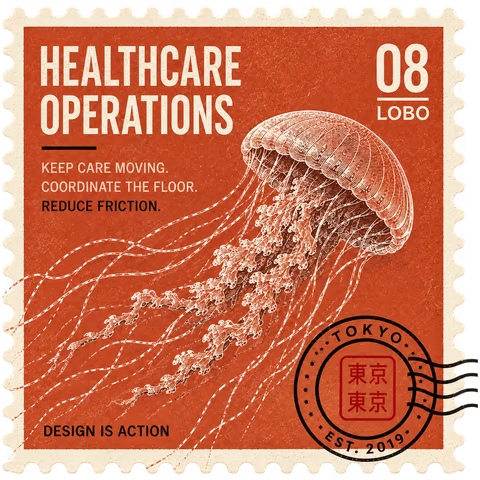
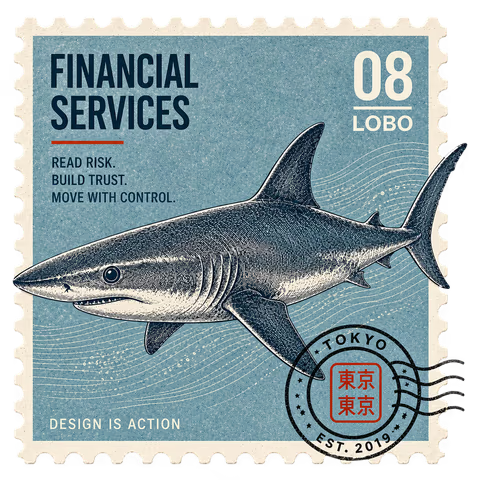
I’ve designed products across ServiceNow, Compass Healthcare Digital, and Charles Schwab, spanning enterprise platforms, healthcare operations, and financial services.

I tend to get involved while the product is still unsettled: competing assumptions, unclear ownership, workflows that don’t match reality, or a new capability without an agreed product shape.

My role is usually to find the structure underneath that ambiguity and turn it into something a team can actually build.

Read the full story

Case studies

Two builds where the real work was the reframe.

Two different questions. One is what an AI product should let a person do before its output counts as a decision. The other is what has to be true of a system before an organization can build on it at all.

01
AI REVIEW SYSTEM · INDEPENDENT BUILD

Deciding when to trust the model.

Evidence has to be inspected before a recommendation can become authoritative. The system retrieves and proposes; people review, override and publish.

Evidence gateaccept stays locked until every cited source is inspected
Human decision is the recordthe model proposes; only reviewed human judgment gets published

Judgment

If the system can do it, let it.

Deciding what an AI system may do on its own, and what it has to hand back to a person, is the call I make on every product I work on. It is rarely a model question. It is a question about consequence.

  • Where can the system act?

    Low-cost, recoverable actions can move without a person.

  • Where must it ask?

    Consequence and permissions can make review part of the product.

  • What happens when it’s wrong?

    Recovery, reversibility, and accountability have to be designed in.

Judgment

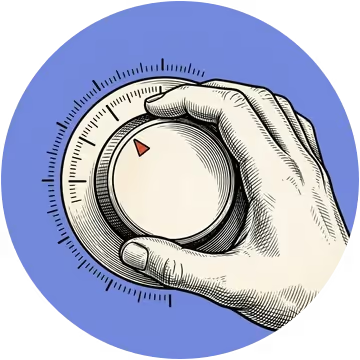
How much of the mistake can be taken back.

One click undoes itTakes work to undoPermanent

What it costs when the system is confidently wrong.

A minor annoyanceCostly to fixReal harm

How far the consequence travels past the person who triggered it.

Only the person actingTheir whole teamEveryone downstream

Recommended operating mode

The system should prepare this, then ask.

Easy to take back and costly to get wrong, while the impact stays with the person acting. The system can prepare the action, but a person makes the commitment.

From the dials

ReversibilityOne click undoes it
Error costCostly to fix
Blast radiusOnly the person acting
PolicyHuman approval before commitment

My call: let it prepare the move, but the yes stays with a person. Ask me why, or move a dial and I may change my mind.

Experiments

Smaller things, built to find something out.

Where I test these decisions in code, interfaces, and policy. These are unfinished on purpose: each one exists to answer a question I could not answer by reading about it.

Working notes

Ideas I keep returning to while building AI products.

Read the working notes

Compare notes

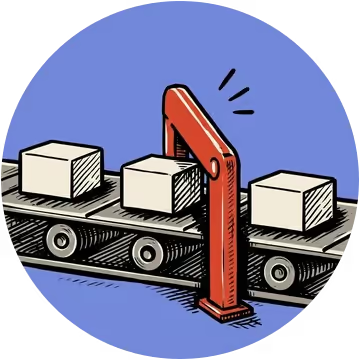
System acts

Where errors are bounded and recoverable.

Pauses for approval

Where a person sees the evidence before the system commits.

Hands control back

With a clear record of what changed, what triggered it, and why.

Send a note. I reply within two business days.